
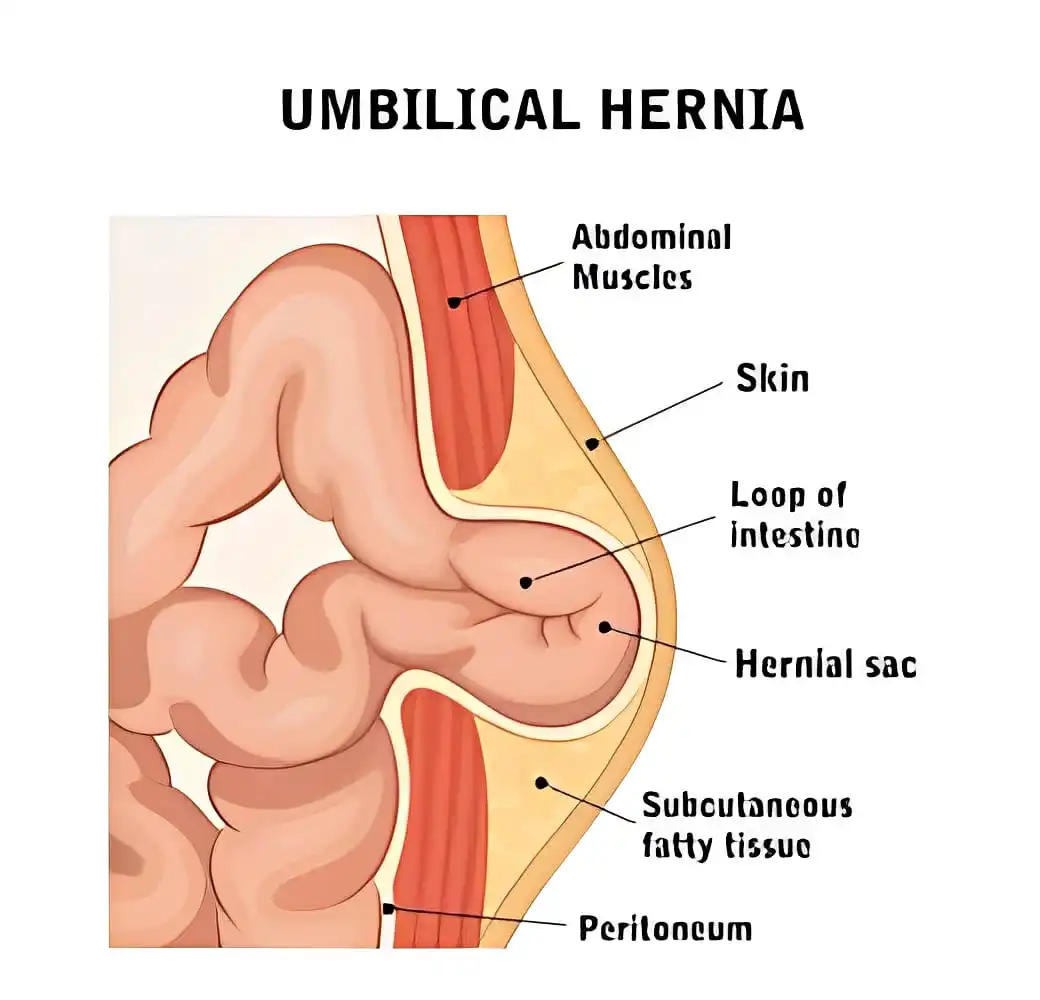
In this condition, a tissue bulges next to the belly button or navel. The condition is majorly caused when organs protrude from their actual region due to the weakening of the neighboring tissues. It creates a herniated sac that carries a part of the intestine, fat or fluid.
Causes of Umbilical Hernia
- Obesity
- Multiple pregnancies
- Straining during passing motions
- Previous abdominal surgery
- Lifting heavy weight, excess coughing
- Strenuous abdominal activities
Symptoms of Umbilical Hernia
- Bulge felt at umbilical region
- Pain or discomfort at umbilical region
- Nausea and vomiting
- Fever
- Constipation
- Discoloration or redness at the umbilical region
Diagnostic Techniques of Umbilical Hernia
An individual must undergo a physical examination wherein the umbilical hernia doctor will diagnose the issue. They will also specify the kind of hernia that has developed. The doctor may also request an abdominal ultrasound, X-ray, CT scan or blood test to check for complications.
How to Prepare for the Surgery?
Just like the recovery process, preparing for umbilical hernia surgery is equally essential. Here are some tips to help you prepare:
- Pre operative investigations are done prior to surgery, for fitness purpose.
- Fasting instructions must be followed, such as eating or drinking six hours before the surgery. Some patients can consume water occasionally.
- Blood pressure, heart rate, and urine tests are conducted on the surgery day.
- Smokers are asked to stop smoking as it can lead to getting a wound or chest infection.
- A consent form needs a signature confirming that the patient understands the risks, benefits and possible alternatives involved while undergoing the procedure.
Fast Recovery Methods After Umbilical Hernia Repair
This period defines whether the hernia has a chance of recurrence or not. Safety and care are expected during recovery. Follow these preventive measures after the umbilical hernia surgery:
- For pain relief, consuming painkillers like paracetamol or ibuprofen may help. It will be advised by the surgeon. Look for directions mentioned on the package and only take the prescribed dose.
- Avoid driving unless you are confident. Ask for help to move you around and discuss with the doctor before moving out.
- Discomfort in the abdominal region may persist for a week or two. Avoid strenuous exercises for the initial two weeks, straining or stretching the healing wound, causing increased swelling.
- Allow the stitches to dry on their own. It will be removed after 8-10 days of surgery.
- Don't bathe for the first two days.
Threats Involved in Not Treating Umbilical Hernia in Adults
It is an absolute misconception that the hernia can be cured on its own without any proper treatment or with medications. The absence of significant symptoms doesn't give you a green signal to delay the treatment. Untreated hernia for long gradually increases the size of the bulge, besides making it more uncomfortable and life-threatening for the patient. A bowel loop may bulge and the blood supply to may be hampered, infection may occur, thus, an emergency surgery may be required.
What Happens in Laparoscopic Surgery for an Umbilical Hernia?
Laparoscopic hernia surgery for an umbilical hernia involves making small incisions on abdomen, through which a laparoscope and specialized instruments are inserted. Under general anesthesia, carbon dioxide gas is introduced to create space for a clear view. The umbilical hernia doctor visually inspects and reduces the hernia, placing a synthetic mesh over the weakened area for reinforcement. The small incisions are closed with sutures or staples. This minimally invasive approach offers advantages such as reduced postoperative pain and shorter recovery compared to open surgery, making it a preferred option for many patients.
Why Choose Kapadia Multispeciality Hospital?
Most of people are often found ignoring their health conditions, be it with hypertension, umbilical hernia, gallbladder disease, or even nearing the risk of acquiring cancer. Let them not neglect their health and get a diagnosis done for their betterment.
For cutting-edge medical care, turn to Kapadia Multispeciality Hospital. Our renowned facility specializes in a range of medical services, including umbilical hernia surgery, ensuring top-notch treatment for this condition. With a focus on patient well-being and safety, our skilled team delivers exceptional care with precision and expertise. Concerned about costs? Rest assured, we offer transparent pricing for umbilical hernia surgery, providing clarity and peace of mind for our patients. Take the first step towards recovery and book your consultation today.
Frequently Asked Questions
What is an umbilical hernia?
An umbilical hernia is a condition in which tissue bulges next to the belly button or navel. It occurs when organs protrude from their actual region due to weakening of the neighbouring tissues, creating a herniated sac that carries a part of the intestine, fat or fluid.
Can an umbilical hernia heal on its own without surgery?
No. It is a misconception that a hernia can be cured on its own without proper treatment or with medication. An untreated hernia gradually increases in size and can become more uncomfortable and even life-threatening, so timely medical treatment is important.
How long does recovery take after umbilical hernia surgery?
Discomfort in the abdominal region may persist for a week or two. Strenuous exercise should be avoided for the initial two weeks, and stitches are usually removed 8 to 10 days after surgery. Recovery time can be shorter with minimally invasive laparoscopic repair.
Why is laparoscopic surgery preferred for umbilical hernia?
Laparoscopic hernia surgery uses small incisions through which a laparoscope and specialised instruments are inserted, and a synthetic mesh reinforces the weakened area. This minimally invasive approach offers advantages such as reduced postoperative pain and shorter recovery compared with open surgery.
What are the risks of leaving an umbilical hernia untreated?
An untreated umbilical hernia can increase the size of the bulge and become more uncomfortable. A bowel loop may bulge and its blood supply may be hampered, infection may occur, and an emergency surgery may become necessary.
This article is for general awareness only. It does not replace a consultation, examination, diagnosis or treatment by a qualified doctor.