
Hysterectomy
The uterus is removed during hysterectomy surgery in Mumbai. It puts a halt to menstruation and the ability to conceive. This uterus operation may also include the removal of additional organs and tissues, such as the ovaries and/or fallopian tubes, depending on the cause of the surgery.
About Hysterectomy.
The uterus is removed during hysterectomy surgery in Mumbai. It puts a halt to menstruation and the ability to conceive. This uterus operation may also include the removal of additional organs and tissues, such as the ovaries and/or fallopian tubes, depending on the cause of the surgery.
Causes of Hysterectomy.
A Uterus Removal (Hysterectomy) Surgerycan be done for a variety of reasons, including:
For non-cancerous reasons, hysterectomy surgery in Mumbai's Kapadia Hospital is normally considered only after all other therapeutic options have failed.
Hysterectomy Types and Treatment Options.
Types of Hysterectomy Surgery.
- A supracervical hysterectomy occurs when the top section of the uterus is removed but the cervix is left behind.
- A total hysterectomy occurs when the uterus and cervix are removed.
- The uterus, cervix, fallopian tubes, and ovaries are all removed during a total hysterectomy with bilateral salpingo-oophorectomy. If you haven't gone through menopause yet, having your ovaries removed will usually trigger it since your body can no longer make enough oestrogen.
- The uterus, cervix, fallopian tubes, ovaries, the upper region of the vagina and some surrounding tissue, and lymph nodes are all removed during a radical hysterectomy with bilateral salpingo-oophorectomy. Cervical or uterine cancer may necessitate a radical hysterectomy.
Hence, to get your diagnosis, choose your type as well as treatment, book your consultation with the Best Gynecologist in Mumbai only at Kapadia Hospital!
Hysterectomy treatment.
A Hysterectomy Surgery in Mumbai can be done in a variety of methods. A general or local anaesthetic is required for all techniques. A general anaesthetic will put you to sleep so you don't experience any pain during the treatment. Your body will be numbed below the waistline with a local anaesthetic, but you will be awake throughout the procedure.This form of anaesthesia may be mixed with a sedative to make you at ease and sleepy during your Hysterectomy Treatment in Mumbai.
Abdominal Hysterectomy
Our doctor removes the uterus via a big cut in the abdomen during an abdominal Hysterectomy Surgery in Kapadia Hospital, Mumbai. Vertical or horizontal incisions are possible. Both types of incisions have a good proclivity for healing and minimal scarring.
Vaginal Hysterectomy
The uterus is removed through a small incision created within the vagina during a vaginal Hysterectomy treatment at Kapadia Hospital in Mumbai. There will be no visible scars because there are no wounds on the outside.
Laparoscopic Hysterectomy
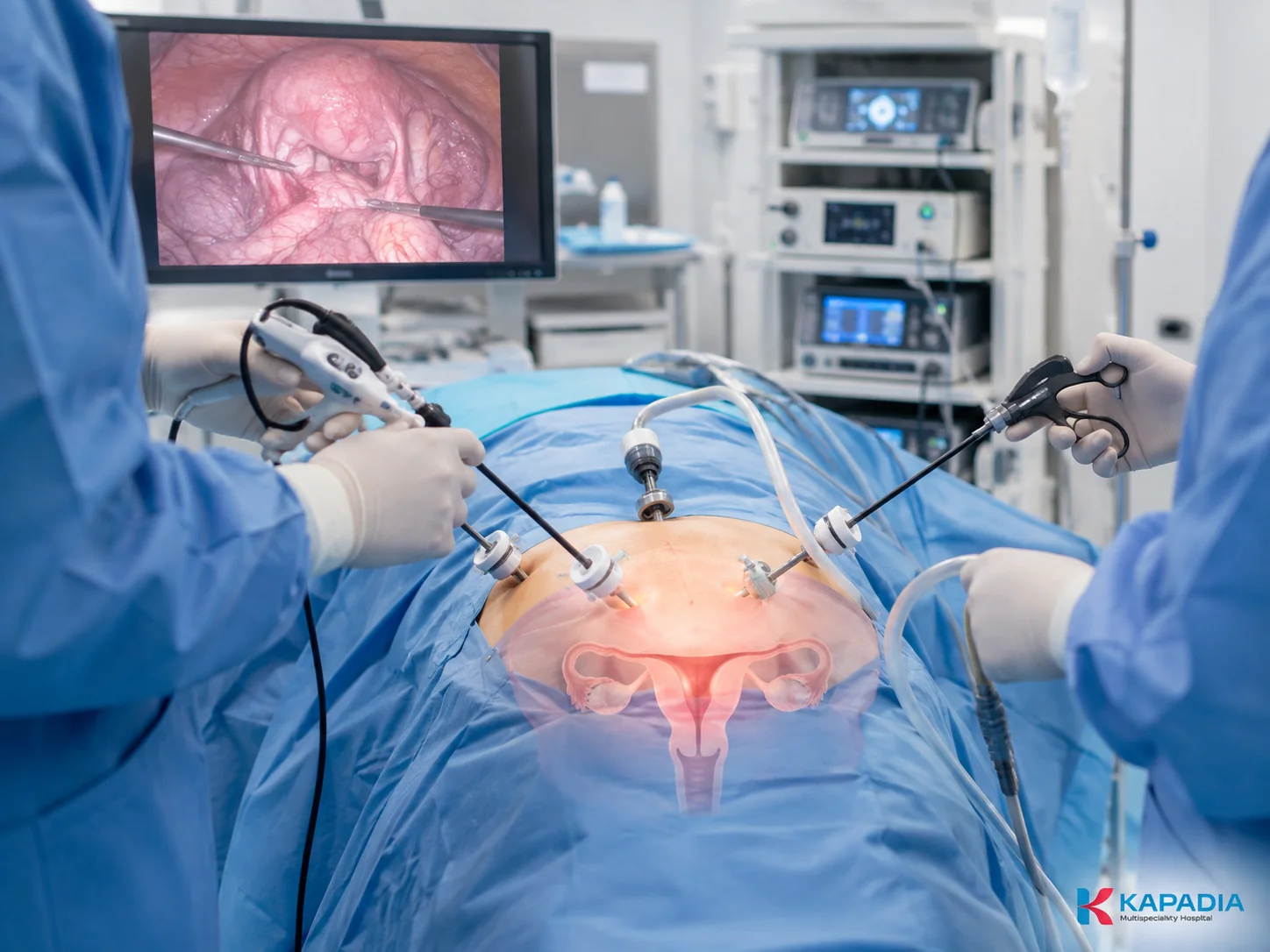
Our doctor uses a minimized equipment called a laparoscope during a laparoscopic hysterectomy surgery. A laparoscope is a long, narrow tube with a front-mounted high-intensity light and a high-resolution camera. The instrument is implanted through abdominal incisions. Instead of one huge incision, three or four tiny ones are made. Once our surgeon can see the uterus, they'll chop it up into small pieces and remove it one at a time.
Recovering from a Hysterectomy.
You'll need to stay back for two to five days after your Hysterectomy Treatment in Kapadia Hospital, Mumbai, so our Best surgeons for hysterectomy can check a few critical signals, such as your breathing, heart rate, or pain. You'll also be encouraged to take a walk around the hospital right away. Walking aids in the prevention of blood clots in the legs.
It's critical to keep walking following your Hysterectomy Treatment in Mumbai after you get home. During your rehabilitation, though, you should avoid certain activities. These are some of them:
- Using a vacuum cleaner to push and pull items.
- Moving and lifting big objects.
- Bending.
- Sexual intercourse.
You should be able to resume most of your normal activities within three to four weeks after a vaginal or laparoscopic hysterectomy. If you've undergone an abdominal hysterectomy or other Alternatives to Hysterectomy, your recovery time will be a little longer. In four to six weeks, you should be entirely cured.