
Copper-T (IUD)
Copper IUDs (intrauterine devices) are a form of birth control. IUDs are a safe and effective method of preventing unintended pregnancies.
What is Copper-T (IUD).
An Intrauterine Device (IUD), commonly also called an intrauterine coil, is made of copper. It is utilized for birth control and as emergency contraception. It is one of the most effective birth control methods. The IUD is implanted in the uterus and has a 10-year lifespan. The IUD is 36 millimeters (mm) long and has two white strings that are 10.5 centimeters (cm) long to aid in the insertion and removal of the device by healthcare professionals. It is suitable for women of all ages.
Copper IUDs (intrauterine devices) are a form of birth control. IUDs are a safe and effective method of preventing unintended pregnancies.
As of 2012, 11.6% of females in the United States use some form of IUD or implant, according to an article in Open Access Journal of Contraception. This article discusses what copper IUDs are, how they work, their side effects, and how to get one.
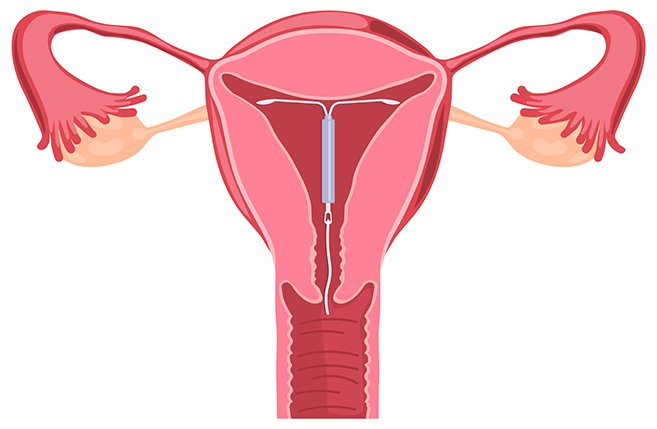
How the Copper-T Works and How Effective It Is.
How does it work?
Copper has a spermicide effect. It thickens the cervical mucus to the point that an egg cannot be fertilized since it can't penetrate it.
It alters natural fallopian tube contractions, making it more difficult for an egg to reach the uterus.
The presence of IUD hampers the development of sperms and they may not survive at all.
How effective is it?
Copper IUDs have an average failure rate of 0.8 percent, according to the Centers for Disease Control and Prevention (CDC). According to the Open Access Journal of Contraception, the failure rate increases somewhat as a person uses it for extended periods of time. For example, after four years, the failure rate rises to 1.3 percent, and after ten years, it is 2.1 percent.
Copper IUDs are therefore more effective than other forms of birth control. Condoms fail 13 percent of the time, and birth control pills fail 7 percent of the time, according to the CDC.
The copper IUD is a highly effective emergency birth control device. It is more than 99.9% effective at preventing unwanted pregnancy. The IUD, on the other hand, no longer prevents pregnancy if it becomes dislodged or falls out. It's critical to check for strings tied to it frequently. If a woman is unable to feel the strings, she should utilize other forms of birth control and schedule an appointment with a healthcare provider immediately.
What to Know Before Choosing a Copper-T (IUD).
Benefits.
A copper IUD offers the following benefits to having:
It is effective
It is long lasting
A copper IUD is a non-hormonal birth control device
You don't have to worry about using it incorrectly
Your fertility is unaffected by the removal
Side Effects.
- For a few days after your IUD is placed, you may have pain, cramping, or backaches
- Between periods spotting
- Irregular periods
- Longer and heavier flow during periods
- STDs are not protected by IUDs
- It can come out on its own at times
Are there any risks?.
If you have any of the symptoms mentioned below, it's important to see a doctor immediately.
- The IUD is partially or completely falling out of the uterus
- If you use an IUD while you're pregnant, you're more likely to have an ectopic pregnancy
- Infection after insertion of the IUD, which may cause infertility if left untreated
- If left untreated, infection after IUD placement might lead to infertility
- The IUD has the potential to penetrate the uterus, necessitating surgery. A person should contact a nurse or a doctor as soon as possible
- IUD strings are not felt, or they appear to be longer or shorter than before
- Can feel the IUD's plastic passing through the cervix
- Have an ache or severe cramps in the lower belly
- During intercourse, experiencing pain or bleeding
- Have a fever, chills, or trouble breathing for no apparent reason
- Experiencing heavy vaginal bleeding than normal
- If the vaginal discharge is different
Who should not use it?.
A copper IUD may be deemed unsafe by healthcare providers if a person:
- Has a sexually transmitted infection (STI), such as chlamydia, or a pelvic infection
- Thinks they're expecting a child
- Suffers from cervical cancer, often known as uterine cancer
- Has suffered a pelvic infection following childbirth or an abortion in the past few months
- Has a copper sensitivity
- Has a clotting disorder that makes it difficult for the body to stop bleeding.
- Diagnosed with breast cancer