
Stomach Cancer Surgery
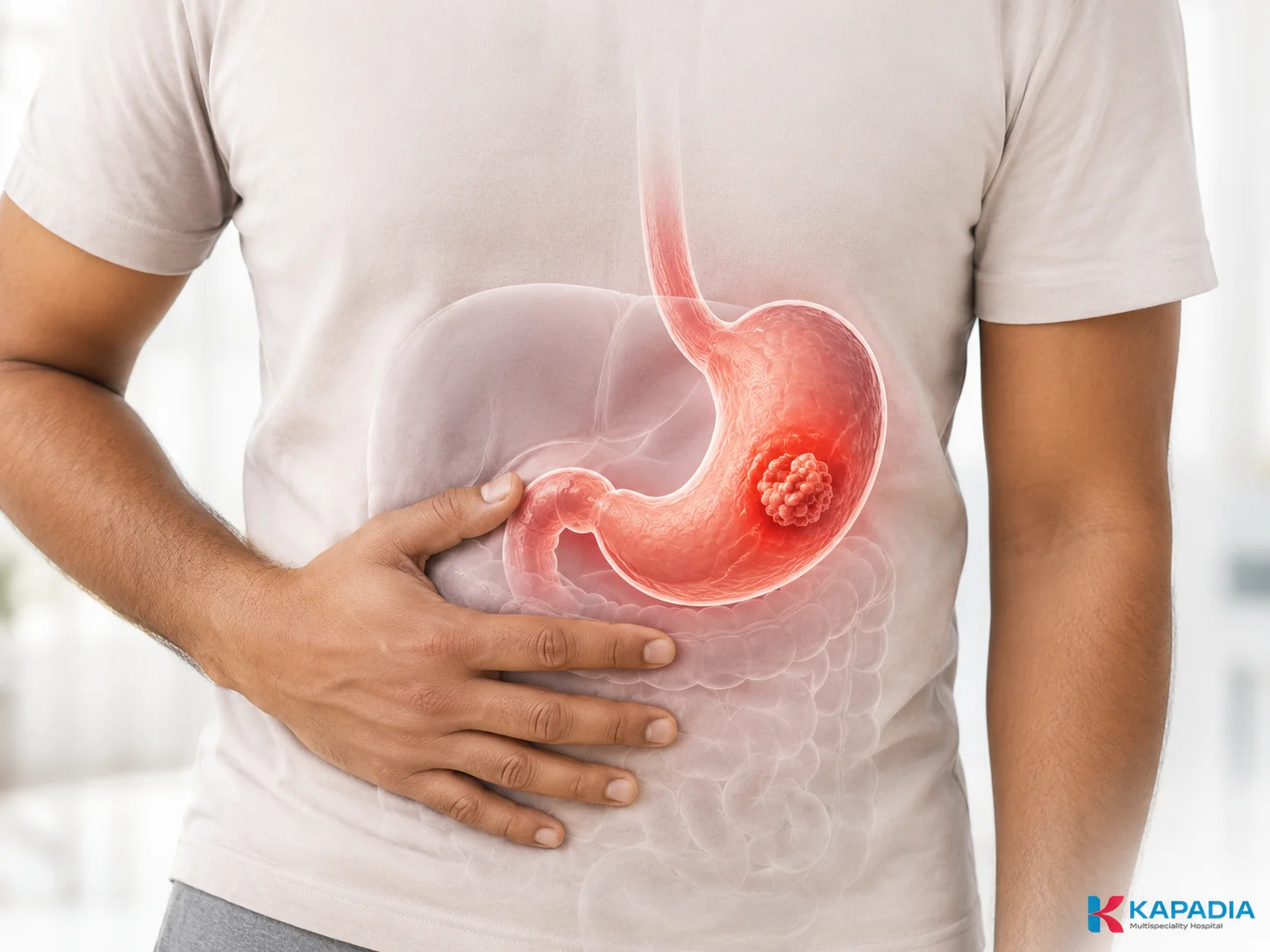
Cancer cells develop in the inner lining of your stomach, which is where stomach cancer begins. These cells can turn into a tumour, necessitating stomach tumour surgery in Mumbai.
About Stomach Cancer
Cancer cells develop in the inner lining of your stomach, which is where stomach cancer begins. These cells can turn into a tumour, necessitating stomach tumour surgery in Mumbai. The disease, also known as gastric cancer, is commonly detected in persons over the age of sixty and progresses slowly over several years.
Almost all stomach cancers begin in the stomach's glandular tissue. The tumour could expand along the stomach wall or grow through it, shedding cells into the bloodstream or lymphatic system. Cancer can spread to other organs if it has progressed past the stomach. As a result, Stomach Cancer Surgery in Mumbai may be required.
Our Cancer specialist in Mumbai classifies stomach tumours based on the type of tissue they begin in.
- Adenocarcinomas: These cancers begin in the glandular lining of the stomach.
- Lymphomas: Lymphomas arise from a type of blood cell that plays a role in the immune system.
- Sarcomas: Sarcomas are cancers of the connective tissue.
- Carcinoid, small cell carcinoma, and squamous cell carcinoma are some of the other forms.
- Breast cancer, melanoma, and other primary malignancies can spread to the stomach and cause metastatic disease.
If you recognise the signs and symptoms of stomach cancer, the Best oncologist in Mumbai from Kapadia Hospital for stomach cancer may be able to detect it early, when it is most treatable.
Stomach Cancer Causes
A genetic mutation in the cells of the stomach causes the cells to develop fast and eventually form a tumour, which is the main cause of Stomach Cancer in Mumbai. The following are some of the risk factors that can raise a person's chances of developing stomach cancer:
Stomach Cancer Symptoms
The following are some of the signs and initial symptoms of Stomach Cancer Surgery in Mumbai:
Common & Early Symptoms
Severe Symptoms
Stomach Cancer Treatment
Stomach Cancer Surgery in Mumbai aims to remove all of the cancerous tissue as well as some healthy tissue around it. Our Stomach Cancer Treatment Hospital offers the following procedures for stomach cancer:
By putting special equipment through an endoscope, very tiny malignancies confined to the stomach's interior lining can be removed by Stomach Cancer Specialist in Mumbai. Endoscopic mucosal resection and endoscopic submucosal resection are two types of endoscopic procedures.
During subtotal gastrectomy, a form of Stomach Cancer Surgery in Mumbai, the surgeon removes the cancer-affected part of the stomach, as well as some healthy tissue around it.
A total gastrectomy entails the removal of the entire stomach as well as some surrounding tissue. To allow food to pass through your digestive system, the oesophagus is connected directly to the small intestine.
Your surgeon may remove lymph nodes from your abdomen to check for malignancy.
In individuals with advanced stomach cancer, an operation to remove part of the stomach may relieve signs and symptoms of a growing malignancy.
Drugs used in chemotherapy move throughout the body, destroying cancer cells that have gone beyond the stomach. Chemotherapy can be used prior to surgery to help shrink cancer and make it easier to remove.
To kill cancer cells, radiation therapy uses high-powered beams of energy like X-rays and protons. The energy beams are emitted by a machine that revolves around you as you lay on a table.
Targeted drug therapy is a type of treatment that focuses on specific flaws in cancer cells. Targeted medication treatments can kill cancer cells by preventing them from exploiting these flaws.
Cancer cells create proteins that make it difficult for immune system cells to perceive them as dangerous, so your body's disease-fighting immune system may not attack them. Immunotherapy works as an indicative shield for the immune system in such a case.
Palliative care professionals collaborate with you, your family, and your other doctors to add an extra layer of support to your ongoing care. While undergoing severe therapies such as surgery, chemotherapy, or radiation therapy, palliative care might be administered.iseases.
If you're looking for Best Multispeciality Hospital in Mumbai for Stomach Cancer Surgery in Mumbai, visit Kapadia Hospital and experience the best facilities, care and quicker recovery associated with your treatment now!
Frequently Asked Questions.
Quick answers about Stomach Cancer Surgery at Kapadia Multispeciality Hospital, Goregaon West.
Stomach cancer begins when cells in the inner lining of the stomach grow abnormally and form a tumour. Surgery aims to remove all of the cancerous tissue along with a margin of healthy tissue around it. Depending on the stage and location, this may involve removing part of the stomach (subtotal gastrectomy) or the entire stomach (total gastrectomy).
Most stomach cancers are caused by a genetic mutation in the stomach cells that makes them grow uncontrollably. Common risk factors include a family history of the disease, smoking, obesity, Helicobacter pylori infection, a high-salt diet, and a diet low in fruits and vegetables.
Early signs can include trouble swallowing, feeling full after eating only a little, bloating after meals, heartburn, indigestion, weakness or fatigue, constipation, and upper abdomen pain. More severe symptoms include vomiting blood, unintentional weight loss, and blood in the stool or black stool.
Diagnosis usually starts with an endoscopy to view the stomach lining, along with a biopsy of any suspicious tissue. Imaging tests such as CT scans, and sometimes blood tests, are used to confirm the diagnosis and determine how far the cancer has spread.
Treatment is planned around the stage of the cancer and may combine surgery with chemotherapy, radiation therapy, targeted drug therapy, immunotherapy, and supportive palliative care. Our specialists tailor the plan to each patient for the best possible outcome.
Kapadia Hospital in Goregaon West offers experienced surgical oncology care with advanced open and laparoscopic techniques, a multidisciplinary team, and coordinated support through diagnosis, treatment, and recovery.
Related Treatments.
Explore related treatments handled by our senior specialist team at Kapadia Hospital.
Expert surgical care across major cancers.
Know more about treatment Breast Cancer SurgerySurgical care for breast cancer.
Know more about treatment Ovarian Cancer SurgerySurgical treatment for ovarian cancer.
Know more about treatment Mouth Cancer SurgerySurgery for oral & mouth cancer.
Know more about treatment