
Medial Patellofemoral Ligament
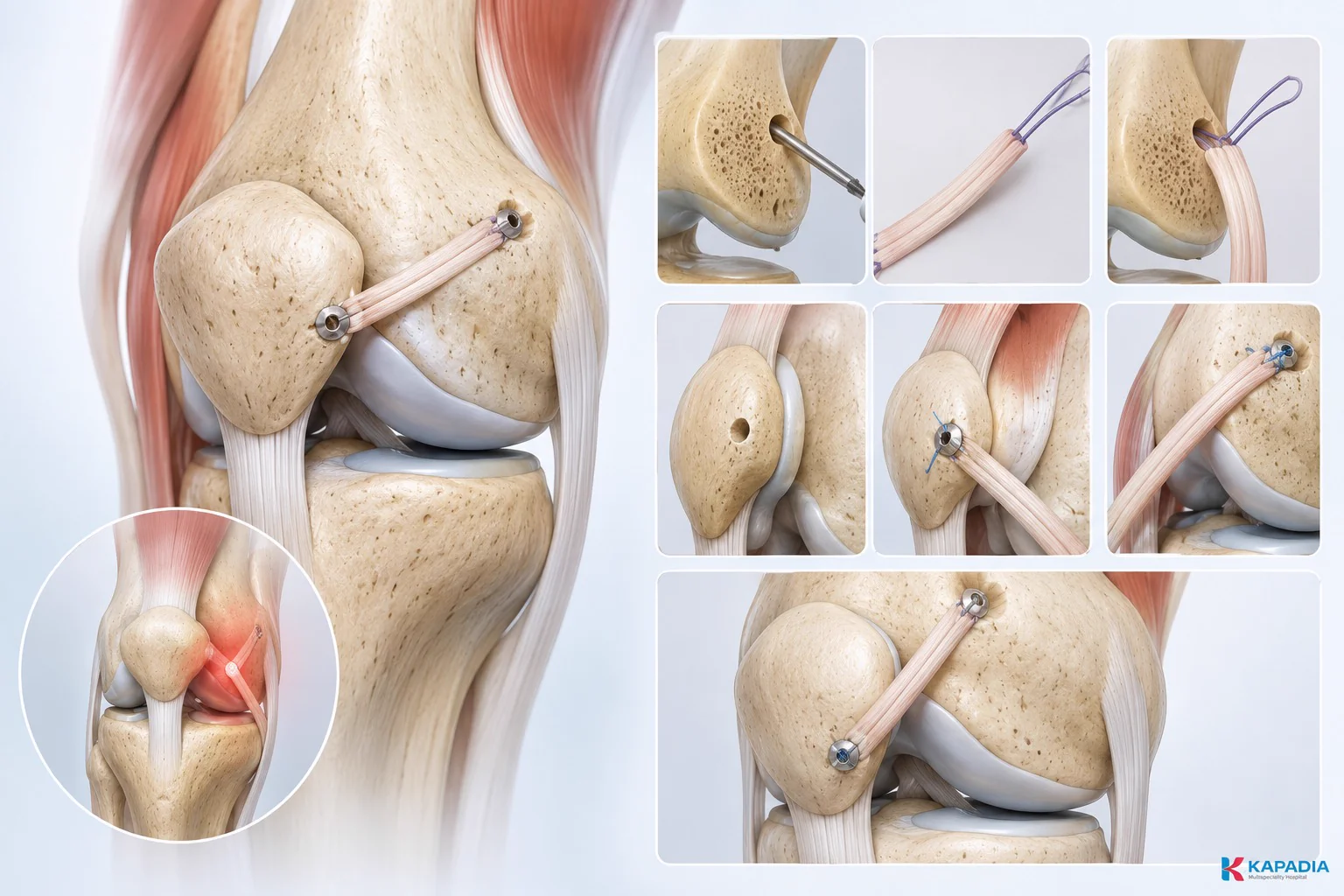
The Medial Patellofemoral Ligament (MPFL) is a soft tissue that helps to support the knee. The MPFL connects the interior of the patella (kneecap) to the thigh's long bone, also known as the femur.
What Is MPFL Reconstruction?
The Medial Patellofemoral Ligament (MPFL) is a soft tissue that helps to support the knee. The MPFL connects the interior of the patella (kneecap) to the thigh's long bone, also known as the femur.
The patellafemoral joint is made up of the patella and the femur.
Causes & Diagnosis
When the MPFL is torn, it can cause dislocation. Patients with an underlying knee deformity, ligament laxity, or weak leg muscles are more likely to experience patella dislocations.
Causes
When the MPFL is torn, it can cause dislocation. Patients with an underlying knee deformity, ligament laxity, or weak leg muscles are more likely to experience patella dislocations.
When the patella dislocates or becomes subluxate (partially dislocated) as a result of a trauma experienced during athletics or an accident. Another cause of patella dislocation is - naturally loose ligaments - most commonly seen in women.
Diagnosis
Your medical history will be reviewed by the doctor. He will inquire as to how and when your knee was damaged and a comprehensive physical examination of your knee will be performed by your doctor. The range of motion, strength, and flexibility of your knees will all be evaluated. To determine whether component of your knee is affected, they may gently move it into different positions.
If your doctor suspects an MPFL injury, he will recommend you to get X-rays and MRI done to further assess the structure of your knee joint. Depending on the results, you will be advised the next course of treatment.
Symptoms
The signs and symptoms that may occur with an MPFL injury include:
How it is treated?
Physical therapy (Physio therapy) is one course of treatment for the MPFL, and surgery is the other. Your doctor may suggest one of the following treatments, depending on the severity of your injury:
Physical therapy
Physical therapy (Physio therapy) is the standard treatment for MFPL injuries. Physical therapists can also help you recover from surgery. Your physical therapist will create a treatment plan tailored to your individual knee problem and objectives. Range of motion exercises, muscle strengthening, manual therapy, modalities, bracing, and activity supervision may all be part of your treatment.
Surgery
Physical therapy may not be enough to heal MPFL injuries in some circumstances. Additionally, if you have other knee issues at the same time, surgery may be required. The surgery's goal is to restore the torn ligament's ability to support the knee. When deciding on surgery, many things must be considered, including the nature of your injury and its state, your age, and your intended degree of activity.
Post-surgery to repair you MPFL, physical therapy (Physio therapy) will be needed for several months. Your physical therapist will use the treatments mentioned above to guide you through the stages of rehabilitation so that you can regain:
- Normal range of motion.
- Strength.
- Knee movement.
Physical therapists understand when and how to assist patients in progressing and recovering safely following surgery. Based on your health and goals, your physical therapist will work closely with your surgeon to help you reach full recovery.
At Mumbai's Kapadia Hospital, you'll find the most advanced surgical methods and highly qualified specialists to treat The Medial Patellofemoral Ligament (MPFL).
Frequently Asked Questions.
Quick answers about MPFL Reconstruction at Kapadia Multispeciality Hospital, Goregaon West.
The Medial Patellofemoral Ligament (MPFL) is a soft tissue that helps to support the knee. The MPFL connects the interior of the patella (kneecap) to the thigh's long bone, also known as the femur. The patellafemoral joint is made up of the patella and the femur.
When the MPFL is torn, it can cause dislocation. Patients with an underlying knee deformity, ligament laxity, or weak leg muscles are more likely to experience patella dislocations. When the patella dislocates or becomes subluxate (partially dislocated) as a result of a trauma experienced during athletics or an accident. Another cause of patella dislocation is - naturally loose ligaments - most commonly seen in women.
The signs and symptoms that may occur with an MPFL injury include:
Your medical history will be reviewed by the doctor. He will inquire as to how and when your knee was damaged and a comprehensive physical examination of your knee will be performed by your doctor. The range of motion, strength, and flexibility of your knees will all be evaluated. To determine whether component of your knee is affected, they may gently move it into different positions. If your doctor suspects an MPFL injury, he will recommend you to get X-rays and MRI done to further assess the structure of your knee joint. Depending on the results, you will be advised the next course of treatment.
Physical therapy (Physio therapy) is one course of treatment for the MPFL, and surgery is the other. Your doctor may suggest one of the following treatments, depending on the severity of your injury: Physical therapy (Physio therapy) is the standard treatment for MFPL injuries. Physical therapists can also help you recover from surgery. Your physical therapist will create a treatment plan tailored to your individual knee problem and objectives. Range of motion exercises, muscle strengthening, manual therapy, modalities, bracing, and activity supervision may all be part of your treatment.
Related Treatments.
Explore related treatments handled by our senior specialist team at Kapadia Hospital.
Minimally invasive keyhole joint surgery.
Know more about treatment ACL / PCL RepairArthroscopic knee ligament reconstruction.
Know more about treatment Ligament InjuriesDiagnosis & repair of knee ligament injuries.
Know more about treatment Meniscus InjuryArthroscopic treatment for meniscus tears.
Know more about treatment Shoulder DislocationCare for recurrent shoulder dislocation.
Know more about treatment Rotator Cuff RepairArthroscopic rotator cuff tear repair.
Know more about treatment Frozen ShoulderTreatment to restore shoulder movement.
Know more about treatment Sports InjuryComplete sports-injury diagnosis & care.
Know more about treatment