
Gastroscopy
Gastroscopy is an internal examination of the stomach, oesophagus (gullet) and upper gastrointestinal tract, which is used to confirm or rule out medical conditions. It involves a thin, flexible tube called an endoscope.
What is gastroscopy?
Gastroscopy is an internal examination of the stomach, oesophagus (gullet) and upper gastrointestinal tract, which is used to confirm or rule out medical conditions. It involves a thin, flexible tube called an endoscope. The endoscope has a camera and a light on one end. A monitor receives views of your oesophagus, stomach, and duodenum from the camera. An upper gastrointestinal endoscopy is another term for the procedure.
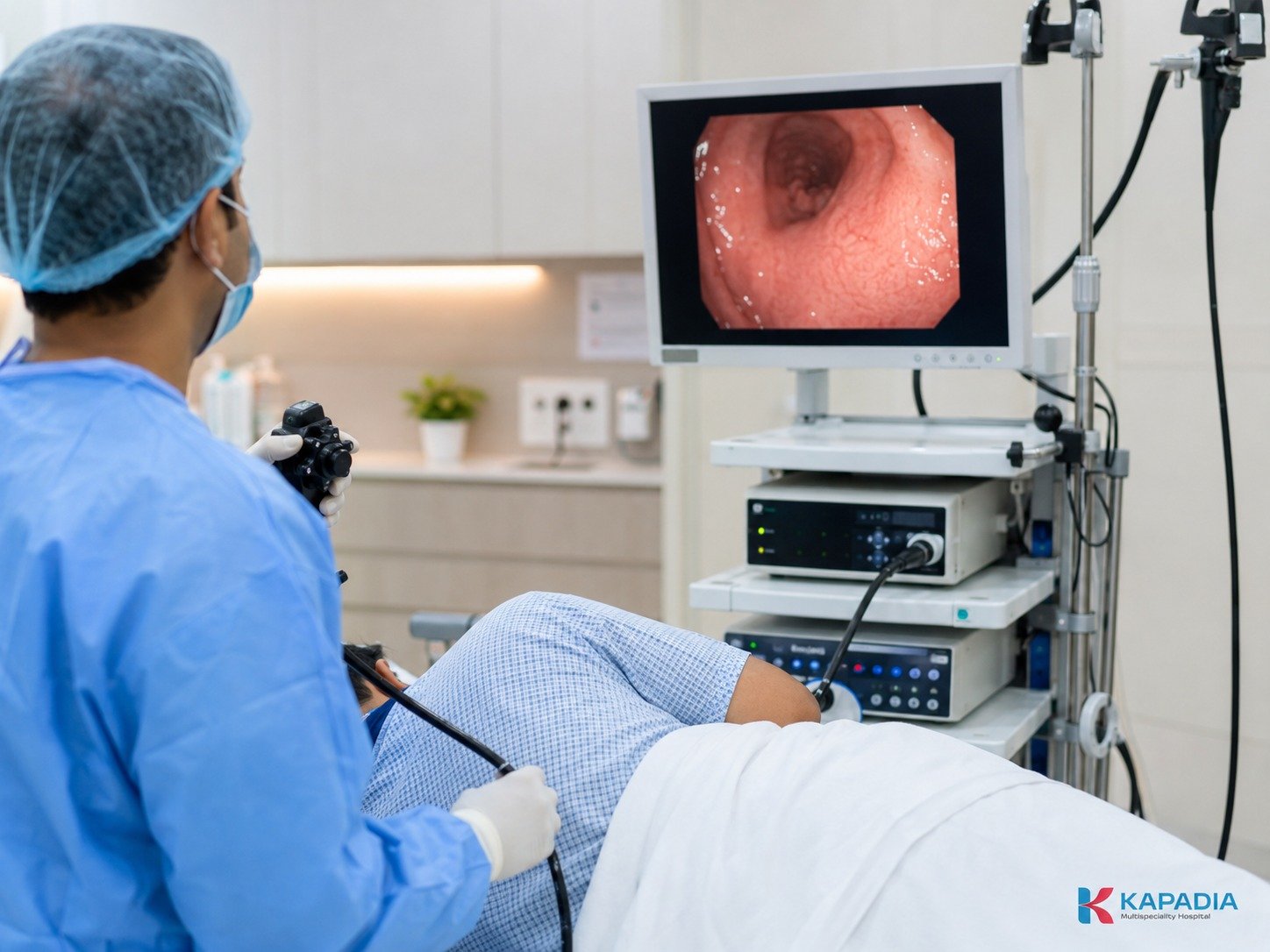
Gastroscopy: Uses, Procedure & Preparation
A diagnostic gastroscopy is a procedure used to evaluate symptoms or confirm a diagnosis. Here are a few listed uses of gastroscopy:
What is the use of gastroscopy?
A diagnostic gastroscopy is a procedure used to evaluate symptoms or confirm a diagnosis. Here are a few listed uses of gastroscopy:
- To identify problems such as stomach ulcers or gastro-oesophageal reflux disease (GORD), which causes heartburn and acid reflux.
- A gastroscopy is also performed to look at issues like dysphagia (swallowing difficulties) or a chronic stomach ache.
- Bleeding ulcers, oesophageal blockages, noncancerous growths (polyps), and tiny cancerous tumors.
Procedure
For the procedure, your throat will be numbed with a local anaesthetic spray. A sedative is always an option that can be chosen. The sedative will make you drowsy and have reduced awareness about what's happening.
The endoscope will be placed in the back of your mouth by the doctor performing the procedure, and you will be asked to swallow the initial part of the tube. After that, it will be guided down your oesophagus and into your stomach.
NBI Advanced Endoscopy
NBI Advanced Endoscopy, helps doctors to see more aiding in better diagnosis.
NBI technology in Advanced Endoscopy helps in having more accurate observation of the mucosa I layer, along with dual Focus (Zoom Endoscopy). It helps in early detection and accurate diagnosis
Preparation
Your doctor will explain the procedure and any danger involved before you have a gastroscopy. This contains instructions on how to make the examination more comfortable by taking medicine. If you take medicine on a daily basis, you should check with your doctor ahead of time to see if and when you should take it on the day of the procedure. Some medications, such as anti-clotting medications, may need to be stopped several days before the gastroscopy. Your doctor will inform you how long you should wait before eating and drinking before the gastroscopy. You will be requested to sign a permission document before to the operation.
Narrow Band Imaging Endoscopy helps in early detection and accurate diagnosis of:
Frequently Asked Questions.
Quick answers about Gastroscopy at Kapadia Multispeciality Hospital, Goregaon West.
Gastroscopy is an internal examination of the stomach, oesophagus (gullet) and upper gastrointestinal tract, which is used to confirm or rule out medical conditions. It involves a thin, flexible tube called an endoscope. The endoscope has a camera and a light on one end. A monitor receives views of your oesophagus, stomach, and duodenum from the camera. An upper gastrointestinal endoscopy is another term for the procedure.
A diagnostic gastroscopy is a procedure used to evaluate symptoms or confirm a diagnosis. Here are a few listed uses of gastroscopy:
For the procedure, your throat will be numbed with a local anaesthetic spray. A sedative is always an option that can be chosen. The sedative will make you drowsy and have reduced awareness about what's happening. The endoscope will be placed in the back of your mouth by the doctor performing the procedure, and you will be asked to swallow the initial part of the tube. After that, it will be guided down your oesophagus and into your stomach.
NBI Advanced Endoscopy, helps doctors to see more aiding in better diagnosis. NBI technology in Advanced Endoscopy helps in having more accurate observation of the mucosa I layer, along with dual Focus (Zoom Endoscopy). It helps in early detection and accurate diagnosis
Your doctor will explain the procedure and any danger involved before you have a gastroscopy. This contains instructions on how to make the examination more comfortable by taking medicine. If you take medicine on a daily basis, you should check with your doctor ahead of time to see if and when you should take it on the day of the procedure. Some medications, such as anti-clotting medications, may need to be stopped several days before the gastroscopy. Your doctor will inform you how long you should wait before eating and drinking before the gastroscopy. You will be requested to sign a permission document before to the operation.
Narrow Band Imaging (NBI) is an advanced endoscopy technology that uses special light wavelengths to highlight fine details of the digestive tract lining, helping our specialists detect and diagnose early abnormalities more accurately than standard imaging.
Your stomach must be empty for a clear and safe examination, so you will be asked not to eat or drink for several hours before the procedure. Our team will give you exact fasting instructions when your gastroscopy is scheduled.
Yes. Gastroscopy is a short day-care procedure at Kapadia Multispeciality Hospital - most patients go home the same day once the effects of sedation, if used, have worn off.
Related Treatments.
Explore related treatments handled by our senior specialist team at Kapadia Hospital.
Diagnostic & therapeutic endoscopy.
Know more about treatment ColonoscopyDiagnostic scope of the colon and large intestine.
Know more about treatment ERCPScope-guided care for bile duct and pancreas.
Know more about treatment Circumcision (ZSR)Painless day-care circumcision surgery.
Know more about treatment Hernia SurgeryLaparoscopic & open mesh repair for hernia.
Know more about treatment GallstonesLaparoscopic keyhole removal of gallstones.
Know more about treatment AppendixKeyhole appendix removal (appendectomy).
Know more about treatment LaparoscopyKeyhole surgery with faster recovery.
Know more about treatment