
FESS Surgery
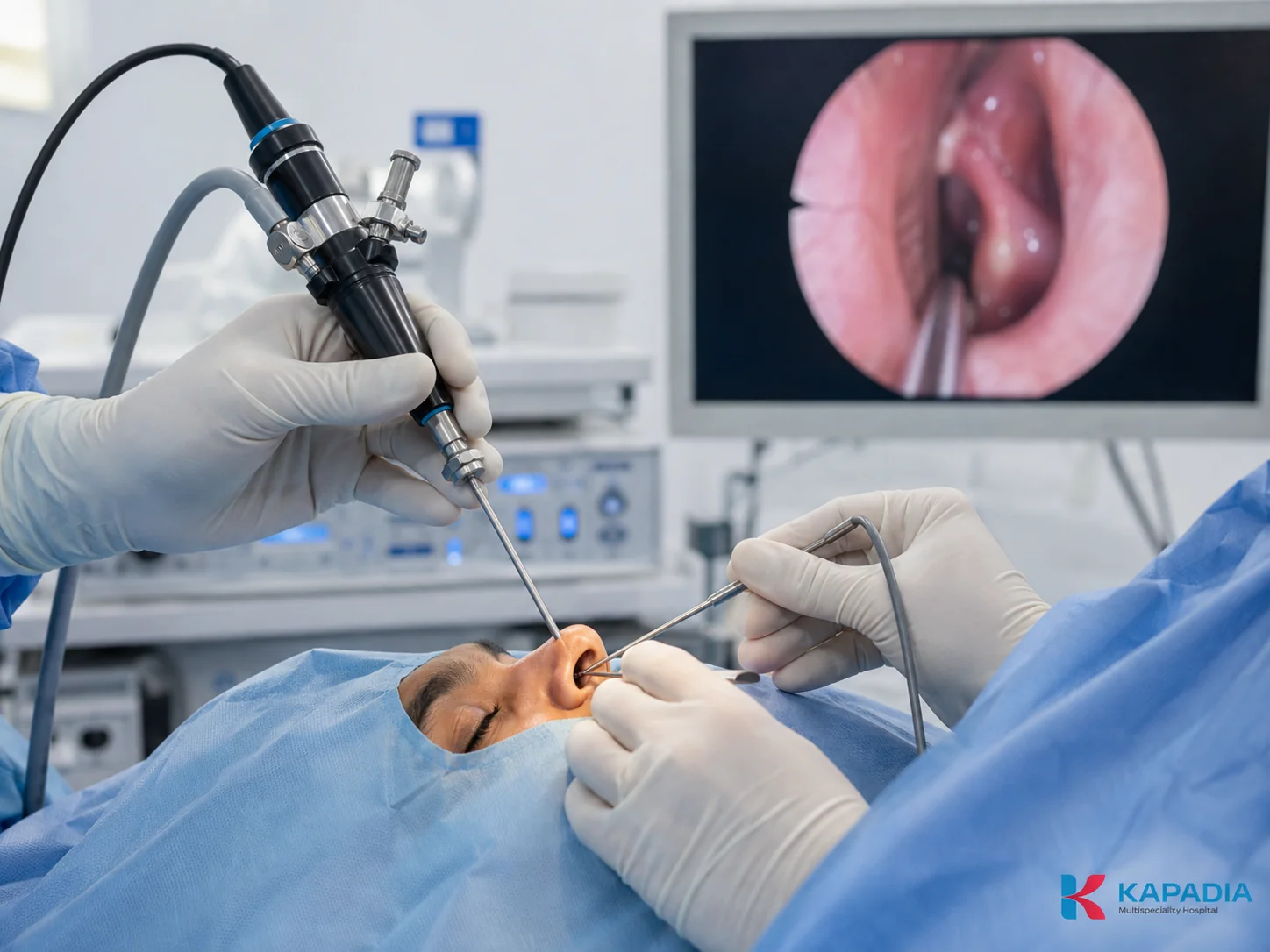
The use of an endoscope in the nose to inspect the nasal cavity and sinuses distinguishes functional endoscopic sinus surgery from traditional sinus surgery in Mumbai. This eliminates the necessity for an external incision in most cases. The endoscope improves the visibility of sick or problematic areas. This endoscopic image, together with thorough x-ray investigations, may show a previously undetected issue.
About FESS Surgery.
The use of an endoscope in the nose to inspect the nasal cavity and sinuses distinguishes functional endoscopic sinus surgery from traditional sinus surgery in Mumbai. This eliminates the necessity for an external incision in most cases. The endoscope improves the visibility of sick or problematic areas. This endoscopic image, together with thorough x-ray investigations, may show a previously undetected issue.
Another distinction is that Fess Surgery in Mumbai focuses on treating the problem's root cause. The ethmoid areas are routinely opened so that the maxillary, frontal, and sphenoid sinuses can be seen. The sinuses can then be examined directly and sick or obstructive tissue removed as needed. Because there is less normal tissue removed, Fess Surgery in Mumbai is typically conducted as an outpatient procedure.
If you're searching for the Best doctor for Sinus in Mumbai, visit Kapadia Hospital now and get your treatment done.
FESS Surgery Causes.
Our ENT Specialists in Mumbai most typically conduct endoscopic sinus surgery for inflammatory and infectious sinus disorders. The following are the most common reasons for Fess Surgery in Mumbai:
Chronic sinusitis that won't go away despite medication therapy
Fess Surgery in Mumbai is often reserved for patients who have confirmed rhinosinusitis based on a full history and complete physical examination, including CT scans if necessary, and who have failed to respond to proper medical treatment. Knowing that medical treatment alone may be insufficient, you must seek treatment at Kapadia Hospital!
FESS Surgery Symptoms.
A detailed history and complete physical examination, including nasal endoscopy, are essential for the proper diagnosis and treatment of chronic sinusitis. The following symptoms are commonly reported by patients with chronic or recurrent illnesses:
FESS Surgery Treatment.
A magnification endoscope put via the nostrils is used to see and remove damaged tissue and bone during Fess Surgery at Kapadia Hospital in Mumbai. The purpose of sinus surgery is to clear infectious material from your nose and sinuses, open blocked airways, and preserve enough good tissue to allow your nose and sinuses to operate normally. These are the three most common procedures that our Sinus Specialist in Mumbai performs:
Ethmoidectomy
An ethmoidectomy is a procedure that removes sick tissue and bone from the ethmoid sinuses, allowing normal drainage to resume. An endoscope, a minimized flexible tube with a small camera and light at the end, is used by our Sinus Specialist in Mumbai to examine your ethmoid sinuses. A microdebrider is a specific tool with a little curved rotating tip fortissue removal.
Maxillary Antrostomy
A maxillary antrostomy is a procedure that clears the sinus orifice. In some circumstances, a maxillary antrostomy fails to completely drain the maxillary sinus. It's also possible that there's sick tissue that can't be removed this way.If this is the case, a new drainage pathway between the maxillary sinus and the nose may need to be created by our Sinus Specialist in Mumbai.
Septoplasty And Turbinoplasty
Your ENT surgeon alignsyour septum for free-flowing air on both sides of your nose during a septoplasty. The purpose of a turbinoplasty is to decrease the turbinates sufficiently to facilitate breathing and sinus drainage. Our Sinus Specialist in Mumbai uses a microdebrider, which has a little curved tip, placed to straighten your septum and minimise your turbinates. There's less chance of removing too much tissue and developing difficulties with this equipment because it's more accurate.