
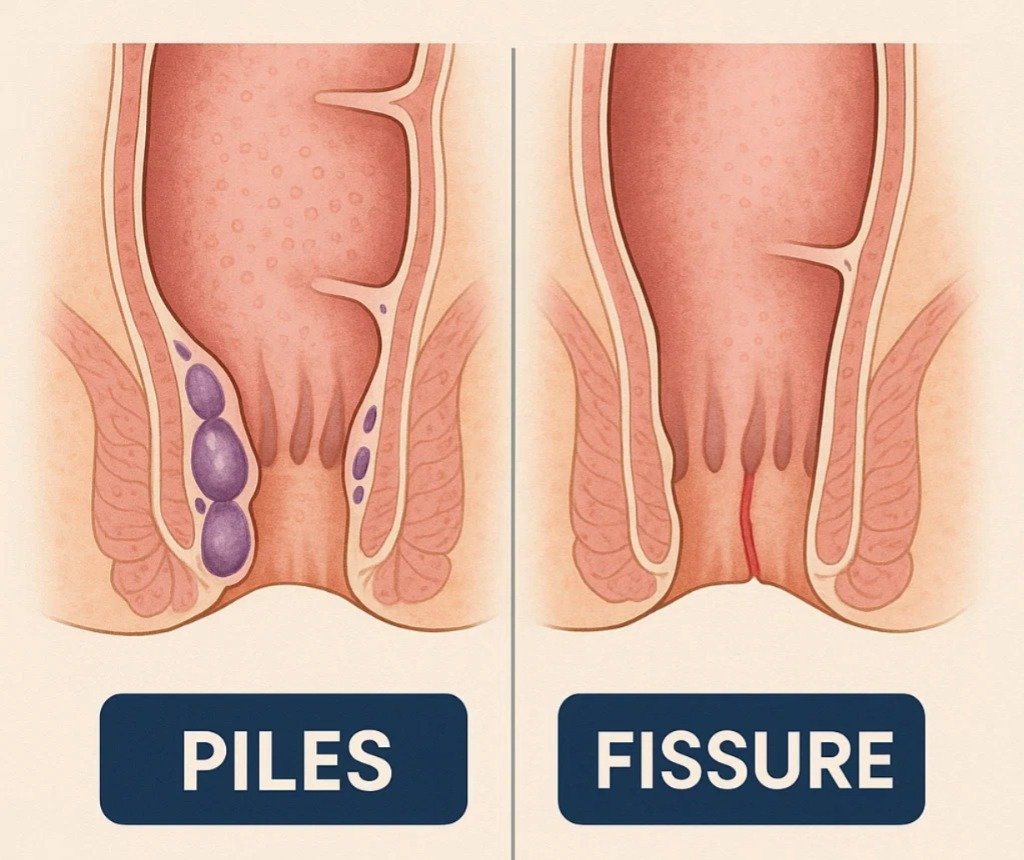
When it comes to anal discomfort or rectal bleeding, two common culprits often come up: piles (hemorrhoids) and anal fissures. While both conditions affect the anal region and may share some similar symptoms, they are quite different in terms of causes, symptoms, and treatment options.
Understanding the difference between piles and fissures helps you recognise what may be causing your symptoms and when to seek help. Both are common, both are treatable, and both respond best to early care from an experienced specialist.
What Are Piles?
Piles, also known as hemorrhoids, are swollen and inflamed blood vessels located in the rectum or anus. They can be internal (inside the rectum) or external (under the skin around the anus).
Common Causes of Piles
- Chronic constipation or diarrhea
- Straining during bowel movements
- Prolonged sitting, especially on the toilet
- Obesity
- Pregnancy (due to pressure on pelvic veins)
Symptoms of Piles
- Bright red blood during or after passing stool
- Itching or irritation in the anal region
- Pain or discomfort, especially with external piles
- Swelling or a lump near the anus
- Mucus discharge after a bowel movement
What Is an Anal Fissure?
A fissure is a small tear or cut in the lining of the anus. It often causes intense pain and bleeding during bowel movements.
Common Causes of Fissure
- Passing large or hard stools
- Chronic constipation
- Anal trauma during childbirth or intercourse
- Inflammatory bowel disease (IBD)
Symptoms of Fissure
- Sharp, burning pain during and after bowel movements
- Blood on the surface of the stool or toilet paper
- A visible crack or tear in the skin around the anus
- Spasm of the anal sphincter
- Persistent discomfort when sitting
Key Differences Between Piles and Fissure
| Feature | Piles | Fissure |
|---|---|---|
| Definition | Swollen veins in the rectum/anus | A tear in the anal lining |
| Location | Internal (inside rectum) or external (around the anus) | Always occurs in the skin around the anus |
| Pain | Usually painless (unless thrombosed) | Sharp, intense pain during bowel movements |
| Bleeding | Bright red blood, often painless | Bright red blood with pain |
| Appearance | Swollen lumps (external piles) | Small tear or crack |
| Causes | Straining, pregnancy, constipation | Hard stools, trauma, diarrhea |
| Healing Time | Can be chronic if untreated | Often heals in a few weeks with care |
| Complications | Can lead to thrombosis, anemia, or prolapse | Can lead to chronic fissures, anal stenosis, or infection |
Diagnosis of Piles vs. Fissure
A doctor can typically diagnose both conditions through a physical examination and medical history.
- For piles, a digital rectal exam or anoscopy may be performed to inspect internal hemorrhoids.
- For fissures, the tear is usually visible during an external inspection.
Treatment for Piles
- Lifestyle Changes: High-fiber diet, hydration, avoiding straining
- Topical Creams: Hydrocortisone, witch hazel, or pain relief ointments
- Warm Sitz Baths: Reduce swelling and promote healing
Medical Procedures for Piles
- Rubber band ligation
- Sclerotherapy
- Hemorrhoidectomy (surgical removal)
Treatment for Anal Fissure
- Dietary Changes: Fiber-rich foods to soften stool
- Stool Softeners: To avoid strain
- Topical Ointments: Nitroglycerin or calcium channel blockers to relax anal muscles
- Botox Injections: Help relax the sphincter
- Surgery: Lateral internal sphincterotomy (in chronic cases)
Can You Have Both Piles and Fissures?
Yes, it's possible to have both conditions at the same time. Chronic constipation or hard stools can lead to fissures, and the straining can simultaneously cause hemorrhoids. In such cases, it's important to consult a colorectal specialist for a proper treatment plan.
How to Prevent Piles and Fissures
Prevention is better than cure. Here are some tips to avoid both piles and fissures:
- Eat a fiber-rich diet (fruits, vegetables, whole grains)
- Drink plenty of water daily
- Avoid straining during bowel movements
- Don't sit on the toilet for extended periods
- Exercise regularly to improve bowel movement
- Treat constipation promptly
Conclusion
While both piles and fissures can cause significant discomfort, understanding their differences is crucial for accurate diagnosis and effective treatment. Piles typically involve swollen veins in the rectum or anus and may be painless, while fissures are painful tears in the anal lining. Both conditions can often be managed with lifestyle adjustments and medical therapies.
However, if symptoms persist, it's important to consult a specialist. Kapadia Multispeciality Hospital offers expert evaluation and advanced treatment options to help patients find lasting relief and avoid complications. Early diagnosis and care can significantly enhance your quality of life.
Frequently Asked Questions
How can I tell if I have piles or a fissure?
If you experience bright red blood without pain, it's more likely to be piles. If the bleeding is accompanied by sharp pain during or after a bowel movement, it's probably a fissure. However, a medical diagnosis is the most accurate way to know.
Do piles and fissures go away on their own?
Mild cases of both conditions can improve with lifestyle changes. However, chronic or severe cases may require medication or surgical intervention.
Is surgery necessary for piles or fissures?
Surgery is usually a last resort, used only when conservative treatments fail or complications arise.
Can spicy food cause piles or fissures?
Spicy foods don't directly cause these conditions but may irritate existing piles or fissures, worsening symptoms.
What doctor should I consult for piles or fissures?
You should consult a general surgeon or colorectal specialist for diagnosis and treatment.
This article is for general awareness only. It does not replace a consultation, examination, diagnosis or treatment by a qualified doctor.