
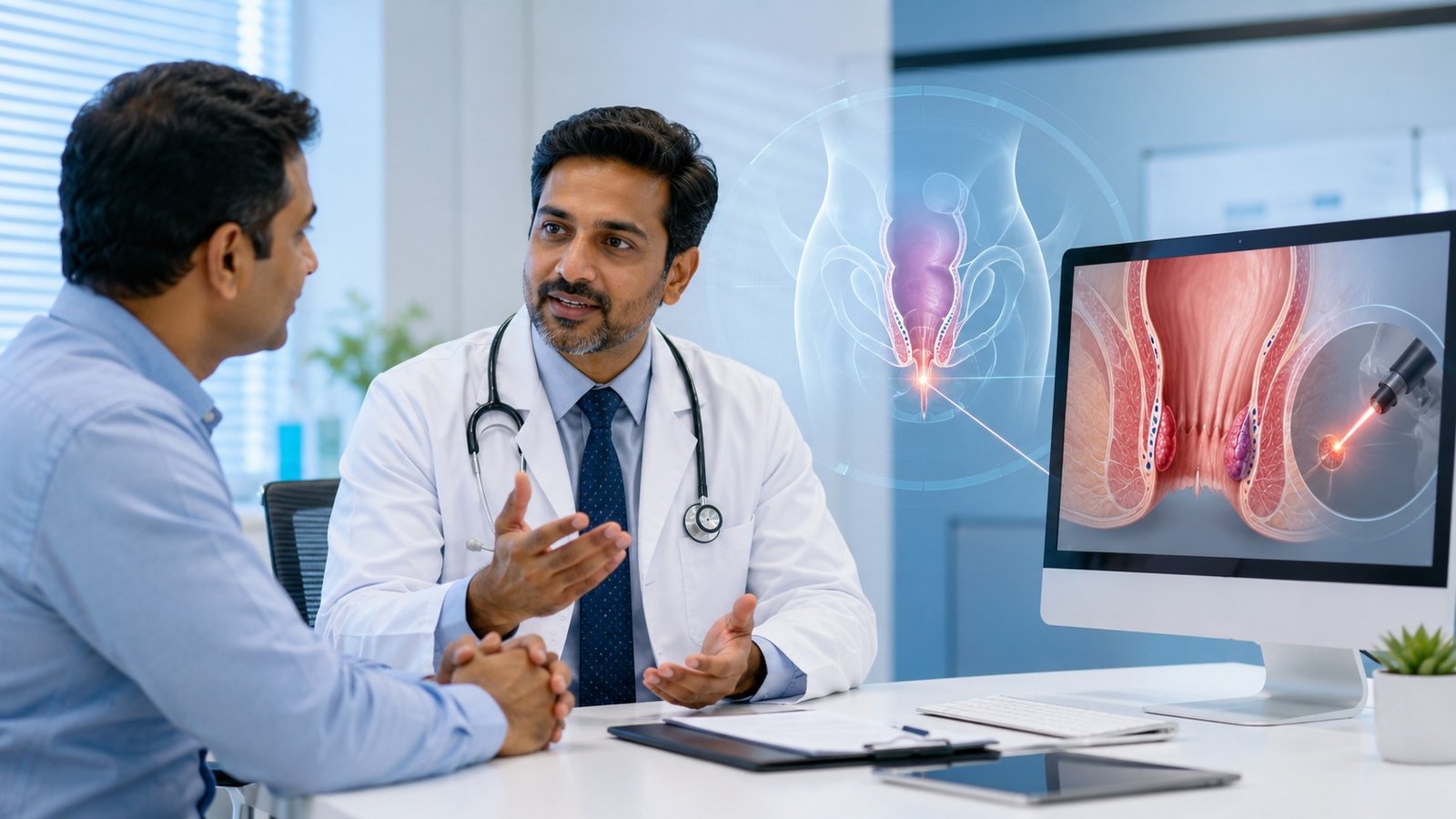
Piles, also known as haemorrhoids, are swollen blood vessels inside or around the anus and lower rectum. They may cause bleeding during bowel movements, itching, swelling, discomfort, pain or a lump near the anus. Internal piles commonly cause bleeding, while external piles may be painful or itchy.
Mild piles may improve with a high-fibre diet, sufficient water, medicines and better toilet habits. However, when symptoms continue, become severe or return frequently, a doctor may recommend laser treatment for piles.
Laser treatment is a minimally invasive procedure that uses controlled laser energy to shrink the affected haemorrhoidal tissue. Before recommending treatment, the doctor examines the patient to understand the type and grade of piles and to rule out other causes of bleeding.
When Is Laser Treatment for Piles Recommended?
Laser treatment may be considered when:
- Bleeding keeps returning
- Pain, itching or swelling affects everyday activities
- Piles come out during bowel movements
- Medicines and lifestyle changes do not provide enough relief
- The piles are moderate or advanced
- The condition keeps returning
- The patient wants a minimally invasive treatment option
Not every patient with piles needs surgery. Smaller piles may improve by avoiding constipation and straining. The correct treatment depends on the size of the piles, symptoms and the patient's overall health.
How Does Laser Treatment for Piles Work?
During the procedure, the surgeon inserts a thin laser fibre into the haemorrhoidal tissue. Controlled laser energy is then delivered to the affected area. This reduces the blood supply and causes the piles to shrink.
The laser also seals small blood vessels, which may reduce bleeding during the procedure. Because laser treatment usually creates a smaller wound than conventional open surgery, many patients experience a shorter and more comfortable recovery.
Laser haemorrhoid ablation is commonly used for moderate to large internal piles. However, the exact procedure may be different when external piles, fissures or other conditions are also present.
Step-by-Step Procedure
1. Consultation and diagnosis
The doctor asks about bleeding, constipation, pain, itching, swelling and changes in bowel movements. A physical examination is performed. The doctor may also use a small viewing instrument to examine the anal canal and identify the grade of piles.
2. Pre-surgery preparation
The patient may be advised to undergo blood tests and other health checks. It is important to tell the doctor about diabetes, high blood pressure, allergies and all medicines being taken, especially blood-thinning medicines.
The medical team will also provide instructions about eating, drinking and medicines before the procedure.
3. Anaesthesia
Laser piles treatment is performed under suitable anaesthesia so the patient remains comfortable during the procedure. The type of anaesthesia depends on the planned treatment and the patient's medical condition.
4. Laser treatment
The surgeon directs laser energy towards the haemorrhoidal tissue. The tissue gradually shrinks, and the blood supply to the pile is reduced. The exact method depends on the number, type and grade of piles.
5. Observation and discharge
After treatment, the patient is moved to a recovery area and monitored until the effect of anaesthesia has reduced. Many patients can return home on the same day, depending on their health and the extent of treatment.
Is Laser Treatment for Piles Painful?
A common patient question is, is laser treatment for piles painful?
The patient does not normally feel pain during the procedure because anaesthesia is used. After the procedure, some soreness, pressure, burning or discomfort may occur, especially during the first few bowel movements.
Laser treatment may cause less post-operative pain and have a shorter recovery period than some conventional haemorrhoid operations. However, it should not be described as completely painless. The level of discomfort differs depending on the grade of piles, the procedure performed and whether external piles are also treated.
Doctors may prescribe pain-relief medicines and stool softeners. Warm sitz baths may also be advised to reduce discomfort and keep the area clean.
How Much Time It Takes for Piles Laser Treatment?
Patients often search for how much time it takes for piles laser treatment.
The laser procedure itself commonly takes around 30 minutes. However, the patient may spend additional time at the hospital for preparation, anaesthesia and post-treatment observation.
Many patients return home on the same day. Light routine activities may be possible within a few days. Most people need a few days away from work, although recovery depends on the size of the piles, the nature of the job and the patient's general health.
Benefits of Laser Treatment for Piles
Possible benefits of laser treatment include:
- Smaller surgical wounds
- Less bleeding during treatment
- Reduced post-operative discomfort in suitable cases
- Shorter hospital stay
- Faster return to routine activities
- Limited damage to surrounding healthy tissue
- Easier wound care
- Same-day discharge in many cases
The benefits may vary between patients. The surgeon should explain the expected outcome, limitations and alternatives before treatment.
Is Laser Treatment for Piles Safe?
Another frequently asked question is, is laser treatment for piles safe?
Laser treatment is generally considered a safe option for suitable patients when it is performed by a trained surgeon after a proper medical evaluation. However, like any medical procedure, it carries some risks.
Possible complications may include:
- Pain or discomfort
- Bleeding
- Swelling
- Infection
- Difficulty passing urine
- Delayed healing
- Return of piles
- Temporary discharge from the treated area
Patients should contact their doctor if they experience heavy bleeding, fever, increasing pain, difficulty passing urine or unusual discharge after treatment. Laser-treated piles can also return, so long-term diet and bowel habits remain important.
Recovery Tips After Laser Piles Treatment
The following steps may support a smoother recovery:
- Take prescribed medicines on time
- Drink sufficient water
- Eat fruits, vegetables and whole grains
- Take stool softeners when prescribed
- Avoid straining during bowel movements
- Avoid sitting on the toilet for long periods
- Keep the treated area clean
- Take warm sitz baths when advised
- Begin gentle walking after the doctor permits it
- Avoid heavy lifting during the early recovery period
- Attend follow-up appointments
High-fibre foods can make stools softer and easier to pass. Drinking enough water helps dietary fibre work more effectively. These habits may also help reduce the risk of piles returning.
Laser Treatment for Piles Cost
The laser treatment for piles cost is not the same for every patient. It may depend on:
- The grade and number of piles
- Whether the piles are internal, external or both
- The type of laser procedure required
- Anaesthesia charges
- Surgeon and hospital charges
- Pre-surgery tests
- Medicines and follow-up care
- Room category and length of hospital stay
- Treatment of an additional fissure, fistula or other condition
A consultation is necessary to receive an accurate treatment plan and cost estimate. Insurance and cashless approval depend on the patient's policy, medical need and required documentation.
Why Choose Kapadia Multispeciality Hospital for Laser Piles Treatment in Mumbai?
Patients looking for laser treatment for piles in Mumbai can consult the surgical team at Kapadia Multispeciality Hospital in Goregaon West.
Reasons to consider Kapadia Multispeciality Hospital include:
Minimally invasive laser treatment
The hospital provides laser proctology treatment for piles and other anorectal conditions such as fissures, fistulas, pilonidal sinus and perianal abscesses.
Individual treatment planning
The treatment plan is prepared after examining the type, grade and symptoms of piles. This helps the medical team recommend an appropriate treatment rather than following the same approach for every patient.
Modern surgical facilities
Kapadia Multispeciality Hospital provides surgical care supported by medical technology, operating facilities and trained healthcare teams.
Convenient Goregaon West location
The hospital is located on Mahatma Gandhi Road in Goregaon West, making it accessible for patients from Goregaon and nearby areas of Mumbai.
Support during recovery
Patients receive instructions about medicines, diet, bowel habits, wound care and follow-up appointments. This is important because treatment does not end immediately after the procedure.
Conclusion
Laser piles treatment can offer relief to suitable patients with smaller wounds, limited bleeding and a faster return to everyday activities compared with some conventional procedures. However, the treatment may not be suitable for every type or grade of piles.
Repeated bleeding, increasing pain or a lump near the anus should not be ignored. A proper examination helps confirm whether the symptoms are caused by piles or another condition.
Patients considering laser piles treatment can book a consultation at Kapadia Multispeciality Hospital, Goregaon West, Mumbai, for diagnosis and an individual treatment plan.
This article is for general awareness and should not be used as a substitute for medical consultation, diagnosis or treatment.
Frequently Asked Questions
Can piles return after laser treatment?
Yes, piles can return after treatment. The risk may increase when constipation, straining, low-fibre food habits and long periods of sitting on the toilet continue. Following the doctor's diet and lifestyle advice can help reduce the risk.
Can I go home on the same day after laser piles treatment?
Many patients can go home on the same day after observation. However, an overnight stay may be recommended based on the patient's health, anaesthesia recovery and the extent of treatment.
When can I return to work after laser piles treatment?
Many patients can return to light work within a few days. People with physically demanding jobs may need additional rest. The surgeon will provide advice based on the procedure and the patient's recovery.
Will I have bleeding after the procedure?
A small amount of bleeding or spotting may occur, especially during bowel movements. Heavy bleeding, bleeding that increases or bleeding with severe pain should be reported to the hospital immediately.
What food should I eat after laser treatment for piles?
Patients are generally advised to eat fibre-rich foods such as fruits, vegetables, whole grains and pulses. Drinking enough water is also important. The doctor may prescribe a stool softener to prevent constipation.
Is laser treatment suitable for every piles patient?
No. Some early piles may improve with medicines and lifestyle changes, while certain advanced or external piles may require another procedure. The most suitable treatment can be decided only after a medical examination.
This article is for general awareness only. It does not replace a consultation, examination, diagnosis or treatment by a qualified doctor.