
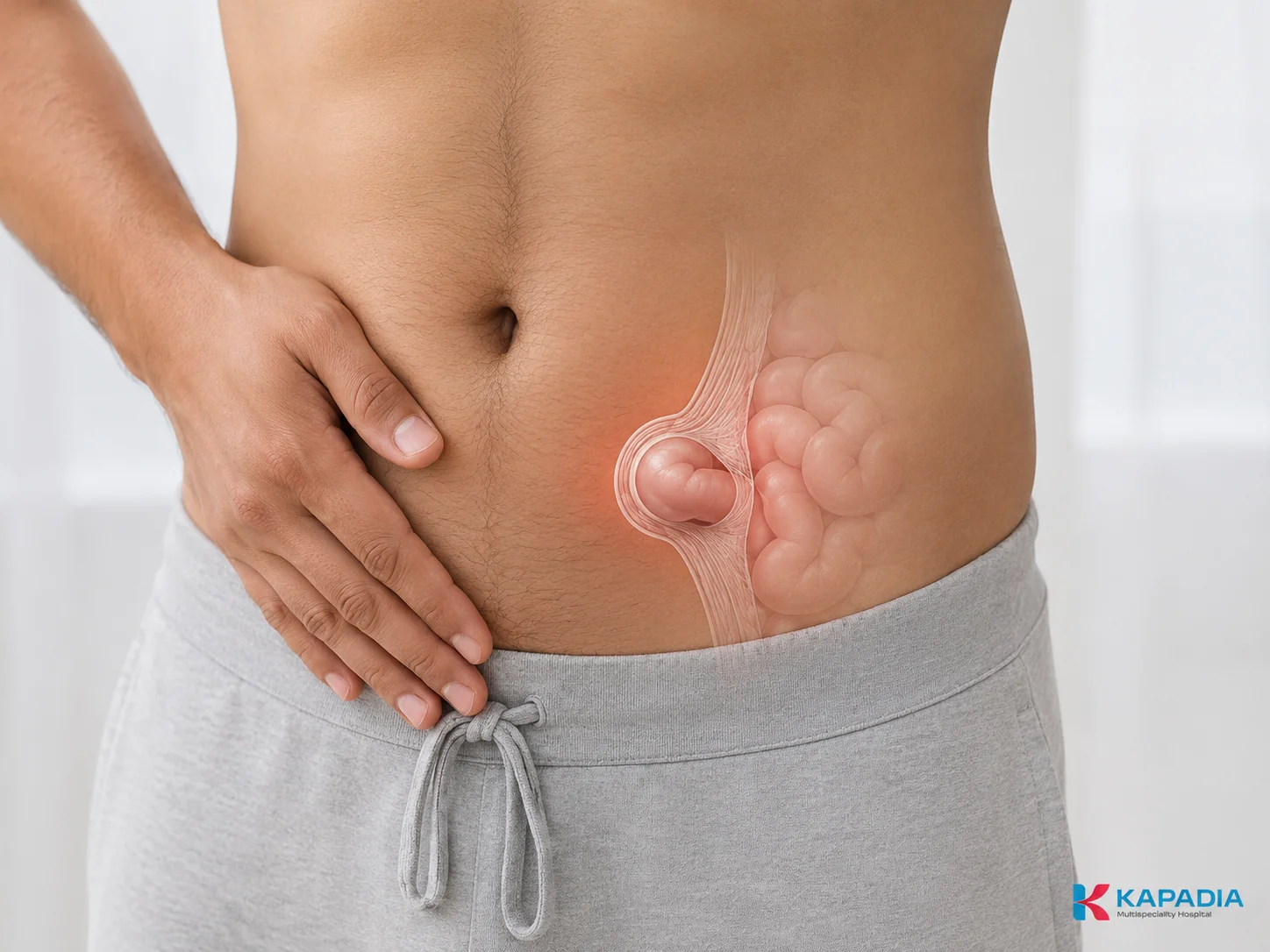
An abdominal hernia occurs when a weakness or hole in the abdominal wall allows organs or tissues to protrude through the opening. It can result in a visible lump or bulge under the skin. Abdominal hernias are common and can affect people of all ages.
At Kapadia Multispeciality Hospital, we perform numerous routine and complex abdominal hernia surgeries with impressive outcomes. The surgeons at our premises showcase their skills and expertise, providing surgery consultation and outpatient supervision so that you deserve only the highest quality of remedy at all costs. Our surgeons are highly skilled and experienced in conducting hernia repair surgeries smoothly with good outcomes. Our surgeons are specially known to perform complex and recurrence hernia surgeries with expertise.
Types of Abdominal Hernias
- Umbilical Hernia: Umbilical hernia occurs at or near the belly button (umbilicus) when there is a weakness in the abdominal wall.
- Inguinal Hernia: 75% of all hernias are Inguinal hernias. This is the most common type. In Inguinal hernia part of your bowel protrudes into your inguinal canal, a passageway that runs down your inner thigh.
- Hiatus Hernia: A hiatus hernia is the result of the upper portion of your stomach pushing up through your diaphragm and into your chest area.
- Epigastric Hernia: A type of hernia that develops in the wall of the upper abdomen and is distinguished by lumps or bulges, are called an epigastric hernia.
- Incisional Hernia: Incisional hernia develops at the site of previous abdominal surgery where the muscles haven't healed properly.
- Flank Hernia: Also called lumbar hernia, this type occurs when there is a weakness or gap in the muscles of the flank region, allowing abdominal contents to protrude through the opening. Flank hernias can occur for various reasons, and they are generally less common than hernias in other areas of the abdominal wall.
- Parastomal Hernia: A parastomal hernia occurs in individuals who have undergone ostomy surgery, where an artificial opening (stoma) is formed in the abdominal wall to let the discharge of waste pass from the digestive or urinary system. Parastomal hernias involve a bulging or protrusion of the abdominal contents around the stoma.
- Spigelian Hernia: Also known as a lateral ventral hernia, it occurs when there is a weakness or opening in the Spigelian fascia, a layer of tissue along the side of the abdominal wall. This type of hernia is relatively rare compared to more common types like inguinal or umbilical hernias.
Diastasis Recti and Hernias Post Pregnancy
Diastasis recti is characterized by separating the rectus abdominis muscles, the paired muscles that run vertically along the front of the abdomen. This separation occurs at the Linea alba, the connective tissue that goes from the center of the stomach and holds the rectus abdominal muscles together. Diastasis recti is common during and after pregnancy due to the stretching and pressure on the abdominal muscles.
While diastasis recti involve the separation of the abdominal muscles, hernias after pregnancy may consist of protrusion of abdominal ranges through a weakened area or opening in the abdominal wall. Pregnancy and childbirth can contribute to developing hernias through similar mechanisms, such as increased intra-abdominal pressure and stretching of the abdominal muscles.
Minimally Invasive Abdominal Hernia Repair
Small incisions are made in this approach, and a laparoscope (a thin, elastic tube with a camera) visualizes the internal structures. The surgeon then employs specialized instruments to repair the hernia defect, reinforcing the weakened abdominal wall with synthetic mesh if necessary. This technique offers several advantages, including a quicker recovery time, reduced pain, and a shorter hospital stay. Minimally invasive techniques, like laparoscopic hernia repair, have become increasingly popular due to their potential for less scarring and a faster return to normal activities. However, this approach's suitability depends on the type and size of the hernia and the patient's overall health, and the expertise of the surgeon.
Abdominal Hernia Surgery: Why Opt for Kapadia Multispeciality Hospital?
- Solid track record of successful outcomes: As a high-volume hub for many types of hernia surgery, we are committed to delivering exceptional services for routine and complex cases. Our patients have experienced low rates of complications and hernia recurrence.
- Focus on prehabilitation: Our hernia specialist in Mumbai focuses on optimizing your health before beginning the surgery to keep complications at bay. It comprises reducing weight, lowering your blood sugar, improving cardiovascular health, quitting smoking, rehabilitation, and exercising to improve your daily life.
- Innovative techniques and sophisticated surgeries: Our esteemed surgeons use the latest technology and advances in hernia treatment to perform surgical procedures. Minimally invasive methods are preferred. We strive to focus on complex hernia revision surgeries with advanced treatment solutions for complicated and recurrent hernias.
- Quick access to specialty care: Recurrent hernia can occur due to extra weight (obesity). In such cases, patients witness recurrent hernia after a successful repair. We make it easy for such people, making the procedure beneficial by weight loss surgery.
- Compassion and support throughout the treatment: Our experts make time for your concerns and thoroughly evaluate your symptoms. We give a complete description of the available hernia treatment options and walk you through the process. Moreover, we are well equipped with glass operation theatre, the latest laser and anaesthesia machines, endoscopy machines, and skilled Operation theatre technicians. For post operative care, if required, we are equipped with an extensive Intensive Care Unit. These all features make the journey of surgery smooth.
Abdominal Hernia Surgery Recovery
After the completion of the hernia repair surgery, we monitor your healing and overall health. At Kapadia Multispeciality Hospital, our extensive recovery and rehabilitation procedure motivates healthy habits to minimize the risk of recurrence, which is most common in most patients. To know more about hernia surgery and avail yourself of an array of medical services, get in touch with us today.
Conclusion
An abdominal hernia develops when tissue or an organ pushes through a weak spot in the abdominal wall, and it will not resolve without treatment. Understanding the type of hernia, the option of minimally invasive repair, and the steps involved in recovery can help you make an informed decision about surgery.
If you notice a lump, bulge or discomfort in the abdomen or groin, an early specialist assessment is the safest step. The hernia team at Kapadia Multispeciality Hospital can evaluate your hernia and recommend an individual treatment plan.
Frequently Asked Questions
What is an abdominal hernia?
An abdominal hernia occurs when a weakness or hole in the abdominal wall allows organs or tissues to protrude through the opening, often producing a visible lump or bulge under the skin. Abdominal hernias are common and can affect people of all ages.
Can an abdominal hernia heal on its own without surgery?
An abdominal hernia does not heal on its own. Surgery is usually advised once the hernia becomes painful or enlarges, because repairing the weakened muscle wall is the definitive way to correct the defect and prevent complications.
What are the main types of abdominal hernia?
Common types include umbilical, inguinal (the most frequent, around 75% of all hernias), hiatus, epigastric, incisional, flank (lumbar), parastomal and spigelian hernias.
What is minimally invasive abdominal hernia repair?
In minimally invasive repair, small incisions are made and a laparoscope with a camera is used to visualise the area. Specialised instruments repair the defect and synthetic mesh may be added to reinforce the wall. This can mean less pain, quicker recovery and a shorter hospital stay for suitable patients.
How long does recovery take after abdominal hernia surgery?
Recovery depends on the hernia size, the surgical technique and the patient's overall health. Many patients recover faster after minimally invasive surgery than after open repair. Your surgeon will guide you on activity, follow-up and when to resume strenuous work.
Is surgical mesh always needed for hernia repair?
Not always. Mesh is often used to reinforce the weakened abdominal wall and reduce recurrence, especially for larger or recurrent hernias, but the decision depends on the type and size of the hernia and the patient's condition.
This article is for general awareness only. It does not replace a consultation, examination, diagnosis or treatment by a qualified doctor.