
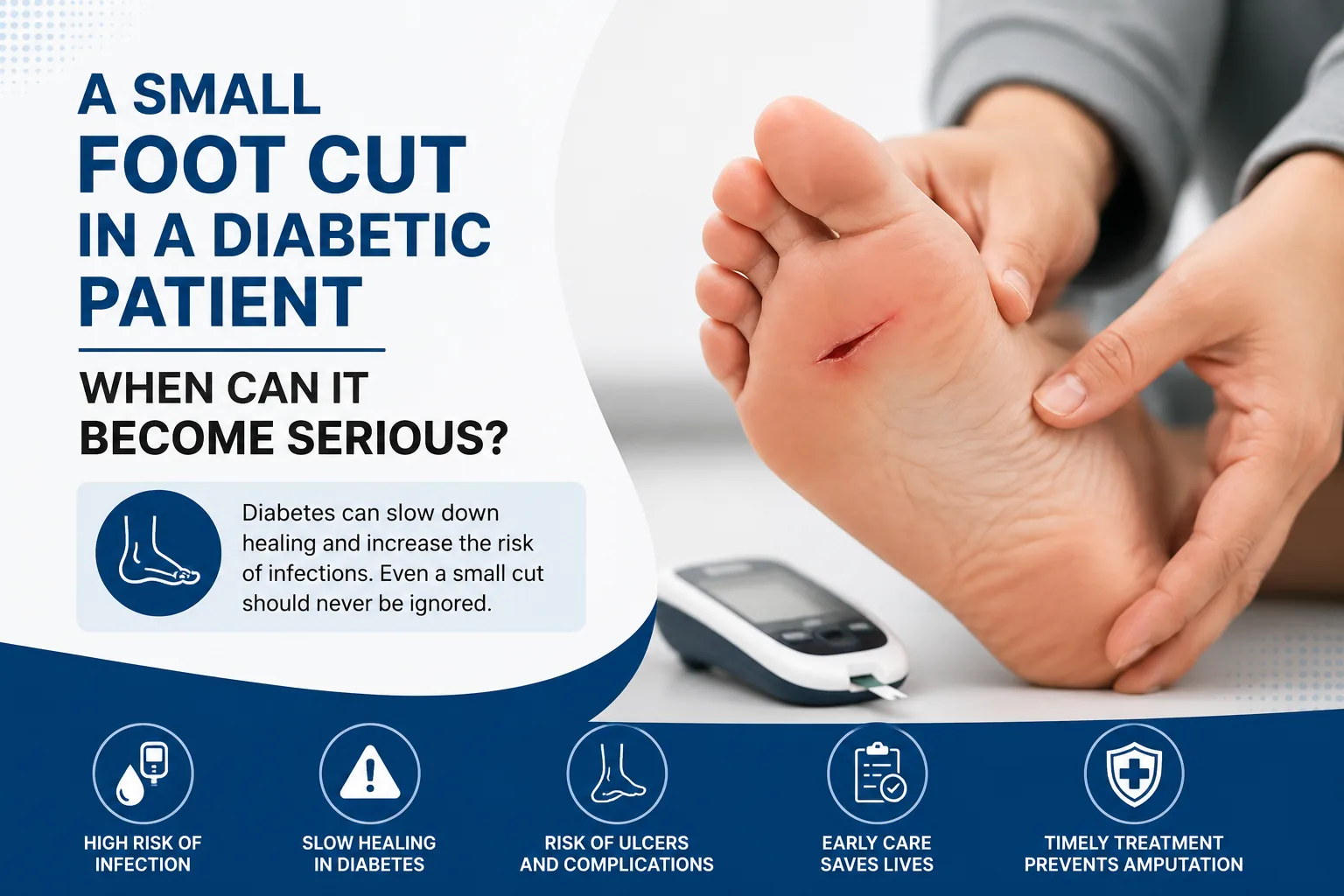
A small cut, blister or shoe bite may look harmless. In a person with diabetes, however, even a minor foot injury needs careful attention. Diabetes can damage the nerves and reduce blood flow to the feet. As a result, the person may not feel the injury, and the wound may heal slowly or become infected.
A small cut on foot in diabetic patient should never be ignored simply because it does not hurt. Loss of sensation can hide pain, while poor circulation can limit the oxygen and nutrients needed for healing. High blood glucose can also make it harder for the body to control infection.
Early diabetic foot care can prevent a small problem from becoming a deep ulcer, serious infection or threat to the foot. Knowing what to do in the first few hours and when to contact a specialist is very important.
Why Can a Small Foot Cut Become Serious in Diabetes?
Several diabetes-related changes can turn a minor injury into a serious wound:
- Nerve damage: Diabetic peripheral neuropathy may cause numbness, tingling or reduced ability to feel pain, heat and pressure. A patient may continue walking on the injured area without knowing it.
- Reduced blood flow: Poor circulation can slow healing because less oxygen and fewer healing cells reach the wound.
- Higher infection risk: High blood glucose can weaken the body's ability to fight bacteria and may allow infection to spread.
- Repeated pressure: Tight shoes, abnormal foot shape, calluses or walking on the wound can repeatedly damage the same area.
- Delayed discovery: A cut under the foot or between the toes may go unnoticed for several days unless the feet are checked daily.
What Should You Do Immediately?
If you notice a minor cut, wash your hands first. Gently rinse the area with clean running water and mild soap around the wound. Pat it dry with clean gauze or a soft towel. Cover it with a sterile, non-stick dressing and reduce pressure on the injured part of the foot.
Contact your doctor or diabetic foot-care team for advice, particularly if you have numbness, poor circulation, kidney disease, a previous foot ulcer or a history of amputation. People at high risk may need same-day assessment even when the cut looks small.
A simple first-response checklist:
- Check the size, depth, location and cause of the cut
- Look for redness, swelling, warmth, discharge, bad smell or dark skin
- Check your blood glucose and follow your diabetes treatment plan
- Use a clean dressing and keep weight away from the wound as much as possible
- Arrange medical review if the wound is deep, dirty, caused by a puncture, or does not begin improving
What Should You Avoid Doing?
Avoid these common mistakes:
- Do not walk barefoot, even inside the home
- Do not cut away dead skin, calluses or blisters yourself
- Do not apply strong chemicals, acid-based corn removers or unprescribed home remedies
- Do not soak the foot for long periods, because the skin can become soft and damaged
- Do not use very hot water, heating pads or hot-water bottles on numb feet
- Do not continue wearing the shoe that caused the injury
- Do not wait for pain before seeking help, because neuropathy may reduce pain sensation
Diabetic Foot Infection Symptoms to Watch For
A wound may be infected even when pain is mild. Check the foot at least once a day and look at the sole, heel and spaces between the toes. Use a mirror or ask a family member for help when needed.
- Redness that is spreading around the wound
- Increasing swelling or warmth
- Pus, cloudy fluid or a bad smell
- Skin that becomes black, blue, pale or unusually dark
- A blister, ulcer or open area becoming larger or deeper
- Fever, chills, weakness or high blood glucose without a clear reason
- New pain, or no pain despite a visibly serious wound
- Red lines moving upwards from the foot
- Bone or deeper tissue visible in the wound
When Is a Diabetic Foot Wound an Emergency?
Seek urgent medical care when there is rapidly spreading redness, severe swelling, pus, bad smell, fever, black skin, a deep wound, exposed tissue, sudden loss of circulation, or the person feels unwell. A puncture wound caused by a nail, glass or another object should also be assessed quickly.
Do not wait for a routine appointment when infection appears to be spreading. Deep diabetic foot infections can involve muscle or bone and may require hospital treatment. Earlier treatment gives doctors a better chance to control infection and protect the foot.
How Does a Doctor Examine the Wound?
The doctor checks the wound's size, depth, edges, discharge and surrounding skin. Sensation is tested to look for neuropathy, and pulses or other circulation tests are used to assess blood flow. The patient's footwear, walking pressure and foot shape may also be reviewed.
Blood tests may be advised when infection is suspected. A wound swab or tissue sample may help identify bacteria in selected cases. X-ray, MRI or other imaging can be needed when there is concern about a foreign object, gas in the tissue or infection reaching the bone. Vascular tests may be recommended when circulation is poor.
What Does Diabetic Foot Wound Treatment Include?
Treatment depends on the wound, infection, circulation and pressure on the foot. A simple cut may need cleaning, a suitable dressing, pressure relief and close review. A deeper or infected diabetic foot wound may need a wider treatment plan.
- Professional wound cleaning and removal of unhealthy tissue when needed
- Appropriate dressings that protect the wound and support a moist healing environment
- Pressure relief, also called offloading, using footwear, insoles, a boot or another device
- Antibiotics when a bacterial infection is diagnosed
- Blood glucose management in coordination with the diabetes-care team
- Circulation assessment and vascular treatment when blood flow is reduced
- Treatment of swelling, calluses, fungal infection or nail problems
- Hospital care, drainage or surgery for severe infection
- Advanced wound therapies for selected non-healing wounds after specialist assessment
How Can Future Foot Wounds Be Prevented?
Daily habits that protect diabetic feet:
- Check both feet every day for cuts, blisters, redness, swelling, warm areas and changes in colour
- Wash the feet in warm, not hot, water and dry carefully, especially between the toes
- Apply moisturiser to dry skin but not between the toes unless advised
- Wear clean socks and properly fitted shoes. Check inside shoes for stones, rough seams or sharp objects
- Never walk barefoot outdoors or indoors
- Trim toenails straight across and seek professional help for thick nails, ingrown nails, corns or calluses
- Keep blood glucose, blood pressure and cholesterol within the targets advised by the doctor
- Stop smoking, because smoking further reduces circulation
- Attend regular foot checks, especially when there is numbness, deformity, poor circulation or a previous ulcer
Why Choose Kapadia Multispeciality Hospital for Diabetic Foot Wound Treatment in Mumbai?
Kapadia Multispeciality Hospital in Goregaon West provides specialised care for diabetic foot wounds, non-healing ulcers and complex wounds. Patients can be assessed for infection, nerve damage, blood flow, pressure points and other factors that may delay healing.
The hospital's wound and vein services include advanced wound assessment and treatment options for suitable patients. Care may involve surgeons, wound-care professionals, diabetes management, pressure relief and circulation support, depending on the wound.
Key highlights include:
- Specialist evaluation for diabetic foot wounds and non-healing ulcers
- Wound cleaning, dressing planning and infection management
- Assessment of circulation, oxygen supply and healing risk
- Pressure-relief and podiatry support where required
- Advanced wound-care technologies for selected cases
- Limb-preservation focused care and patient education
- Accessible diabetic foot wound treatment in Mumbai from Goregaon West
Conclusion
A small cut on the foot can become serious in a person with diabetes because nerve damage may hide the injury and poor circulation may delay healing. Infection can spread even when the wound does not cause much pain.
Clean and cover the wound, reduce pressure on it and seek medical advice early. Do not cut calluses, use harsh home remedies or wait for the wound to become painful. Redness, swelling, discharge, bad smell, fever, black skin or a wound that is becoming deeper requires urgent medical attention.
Patients with a diabetic foot wound or a non-healing cut can consult the specialised wound-care team at Kapadia Multispeciality Hospital for assessment and an individual treatment plan.
Frequently Asked Questions
How long should a small diabetic foot cut take to heal?
There is no fixed time. A superficial cut may begin improving within a few days, but diabetes, poor circulation, infection and repeated pressure can delay healing. Contact a doctor if it is not clearly improving or if any warning signs appear.
Can I use an antiseptic liquid on a diabetic foot wound?
Use only products advised by a healthcare professional. Strong antiseptics and chemicals can damage healthy tissue. Gentle cleaning with clean water and a suitable dressing is often safer until medical advice is received.
Why does my diabetic foot wound not hurt?
Diabetic neuropathy can reduce pain and temperature sensation. A wound can therefore be deep or infected without causing much pain. Visual checks are essential.
Should I cover a small foot cut or leave it open?
A clean, non-stick dressing generally protects the wound from dirt and friction. The correct dressing depends on the wound and should be advised by a wound-care professional.
Can a diabetic foot infection spread to the bone?
Yes. A deep or untreated infection can reach the bone, a condition called osteomyelitis. This requires urgent medical treatment and may need imaging, antibiotics or surgery.
How often should a person with diabetes check their feet?
Feet should be checked every day. People with numbness, poor circulation, foot deformity or a previous ulcer also need regular professional foot examinations.
This article is for general awareness only. It does not replace a consultation, examination, diagnosis or treatment by a qualified doctor.